Director of Operations | MEng | MBA | Lean Six Sigma Master Black Belt | International Welding Engineer | NDT Level 3 | Think Positive!

IsaccoBettin

Curious by nature, optimistic by choice.

I love understanding how things work, and then trying to make them work better. I enjoy studying, experimenting and solving problems. The more complex they are, the more they draw me in.

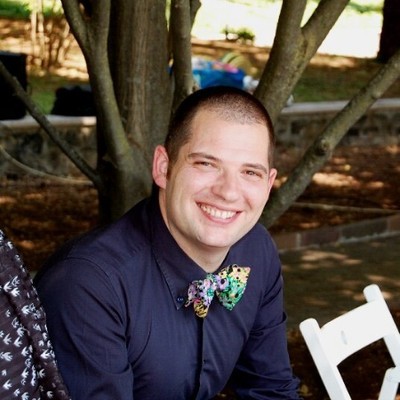
Portrait of Isacco Bettin, smiling, in a dark shirt and a colourful bow tie
01

My values

The dream

Every change starts with a dream. Before the plan and before the objectives, there is the outline of a possible future. When you bring it into focus, it becomes a goal to reach. When many people can see it, it can become a memorable journey.

Optimism

Optimism is a choice you make every day, especially on the hard days. It means facing adversity without wasting time complaining, with a stubborn confidence that a solution exists even when you can't see it yet. Those who complain see a wall. Those who look for a solution see a door they haven't found yet.

Curiosity

You keep growing for as long as you want to discover. Every question opens a path, every attempt teaches something, even the ones that fail. Learning has no finish line: only the next discovery.

02

Musifacturing

Hi! I'm Isacco Bettin, this is my Vicenza accent, and this is Musifacturing… Never Stop Playing!

I take inspiration from a song, play it, and end up on the factory floor. The episodes are in Italian.

Why I do itI do it because I enjoy it. And because, without exaggerating, I'd like to leave the world a little better than I found it. There are already plenty of people out there getting outraged, complaining and crying scandal to get noticed: that spot was already taken! So I picked up a guitar and tried to do the opposite: share what I know, with a light touch. If at the end of an episode someone has learnt something and nobody got angry, I call it a success. So do social media, which aren't used to it.

  1. 00 Mary Had a Little Lamb Stevie Ray Vaughan Edison, the phonograph and the know-how nobody ever wrote down. 3'43"
  2. 01 Money (That's What I Want) Beatles The goal is to make money, and three numbers are enough to know whether you are. 5'44"
  3. SP Ghostbusters Ray Parker Jr. · Halloween special A factory haunted by ghosts. 3'05"
All episodes on YouTube youtube.com/@musifacturing
03

Articles

Written reflections, for those who prefer to read at their own pace.

  • 29 July 2022 Product cost doesn't exist Cost per hour is the result of assumptions. The organisation's costs, on the other hand, are real, and every system has only one bottleneck.
  • 3 February 2022 OEE: handle with care! OEE is one of the most widely used KPIs in manufacturing, but OEE obsession can do real damage. Three dangers hidden in a simple formula.
  • 10 January 2022 Stop planning, start pulling! Nobody is ever happy with their ERP. Why planning based on averages fails, and why you should pull and reduce variability instead.
  • 17 December 2021 "Perfect" processes with "normal" people People are extremely important, but a company's lasting success lies in the processes that hold its know-how. The process leverage theory.
  • LinkedIn Focus Two fires, four firefighters, one fire truck. What prioritising really means.
  • LinkedIn The dynamic duo of problem solving Curiosity and optimism: the two attitudes that turn a problem into an opportunity to learn and grow.
  • LinkedIn …the average depth of the river is 10 cm A river with an average depth of 10 cm can't necessarily be forded by car. Why plans based on averages go wrong.
  • LinkedIn Lean, Six Sigma or Theory of Constraints? What Lean, Six Sigma and the Theory of Constraints try to achieve, where they apply and in which order to introduce them.
  • LinkedIn Real-time OEE? No, thanks! Measuring OEE in real time is like weighing yourself constantly: useless. Why you should look at its three components and give improvement time to show.
  • LinkedIn Zero defects: is it possible? A story of parachutes and zero defects: what changes when the people doing the work live with the consequences.
  • LinkedIn Correlation does not imply causation Two variables moving together are not necessarily cause and effect. Why, in the age of data-driven decisions, the trap is closer than ever.
  • LinkedIn Time is but a reflection of motion Asking people to go faster doesn't save time. The real culprit is the structure of the motions.
  • LinkedIn How to deal with a "necessary evil"? When an evil is called necessary, we stop seeing it as an evil. How to turn your mindset back towards the solution.
  • LinkedIn Inspection or control? Inspection is a post-mortem, control is a health check before a race. Why a control plan makes you more money than an inspection plan.
04

Books

Reading a book is like sitting across the table from the person who wrote it. A Nobel laureate, the father of the Toyota Production System, an FBI negotiator: the source itself, no middlemen, within reach whenever you want. I have never stopped finding that extraordinary. These are the ones I would give as a gift, and keep rereading.

Surely You're Joking, Mr. Feynman!

Richard P. Feynman

A Nobel Prize-winning physicist who cracks the safes at Los Alamos for fun, plays the bongos and learns to draw as an adult. Feynman teaches one thing, and teaches it brilliantly: curiosity is serious business. If it looks like a book of anecdotes, read it again: it's a problem-solving manual in disguise.

The Goal

Eliyahu M. Goldratt

A novel about manufacturing. Sounds like a contradiction, yet it's the book that made me see a plant as a system. Alex Rogo has three months to save his factory, and discovers that the problem isn't keeping everyone busy: it's finding out who is holding everyone back. Read it before you buy another machine.

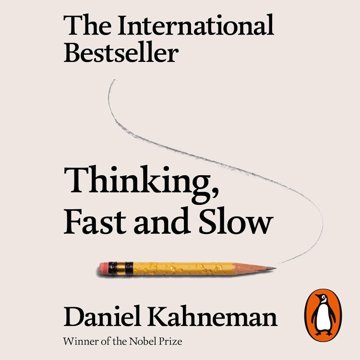
Thinking, Fast and Slow

Daniel Kahneman

Kahneman didn't set out to write an easy read, and he succeeded brilliantly: it's a brick. But it's fascinating, and every chapter makes you doubt a decision you took with too much confidence.

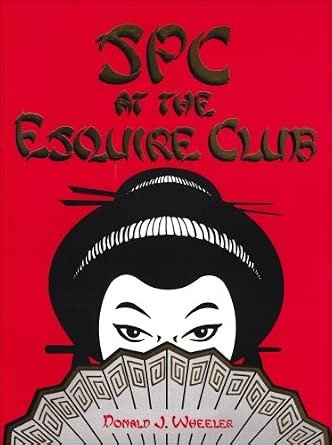
SPC at the Esquire Club

Donald J. Wheeler

A statistics book set in a club, the Esquire Club. Yes, you read that right. Wheeler takes control charts out of the factory and applies them to everyday figures: separating signal from noise, and no longer reacting to every wobble as if it were an emergency. The nerdiest book on the list, and I'm proud of it.

Taiichi Ohno's Workplace Management

Taiichi Ohno

Ohno unfiltered: short chapters, sharp sentences, no mercy for those who hide behind reports. It's the toughest side of Lean: go and see, ask why, and stop accepting that "we've always done it this way". You read it in one evening and digest it over ten years.

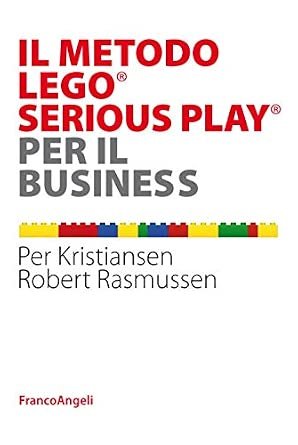
The LEGO® Serious Play® Method

Per Kristiansen, Robert Rasmussen

Serious executives building strategy out of bricks. It looks like a game, and that's exactly the point: when hands are busy, everyone talks, even the people who never say a word in meetings. Try it at least once, with the most sceptical director at the table.

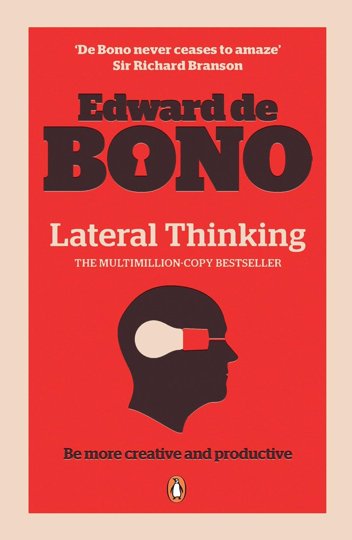
Lateral Thinking

Edward de Bono

The man who coined the term "lateral thinking" explains that you can't dig a hole in a different place by digging the same hole deeper. A book that teaches you to get off the beaten track, with exercises that look like games and actually train your mind.

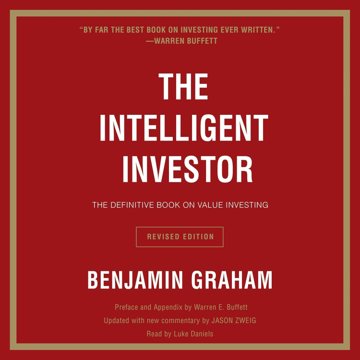
The Intelligent Investor

Benjamin Graham

The book Warren Buffett considers the best ever written about investing. Graham teaches you to tell price from value and not to be dragged along by Mr. Market's moods. It works on the stock market and it works in a company: deciding on real numbers, with a margin of safety, while everyone around you panics.

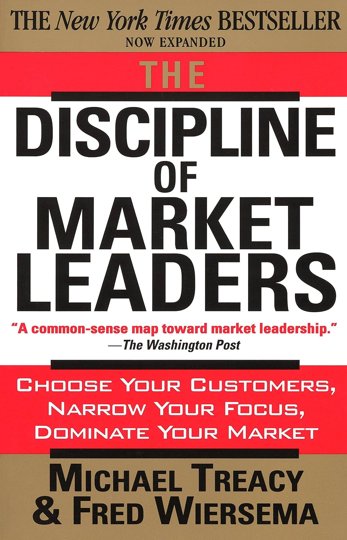
The Discipline of Market Leaders

Michael Treacy, Fred Wiersema

The simplest and most ruthless strategy book I know. You win by choosing one discipline to be the best at: operational excellence, product leadership or customer intimacy. On the other two, being good enough is enough. Those who try to lead in all three usually lead in none.

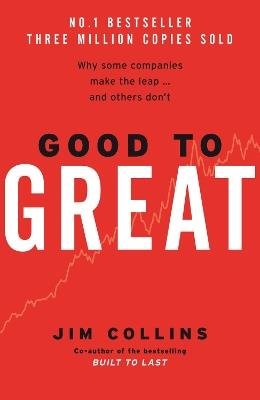
Good to Great

Jim Collins

Collins and his team spent years on the data to understand why a few companies go from good to great, and the most surprising answer is about leaders. No charismatic superstars: humble, fiercely stubborn people who first get the right people on the bus and then decide where to drive it. And the flywheel, which turns slowly at first and then faster and faster, will be familiar to anyone who has led a transformation.

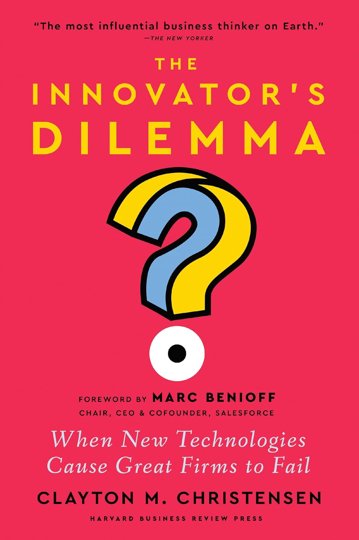
The Innovator's Dilemma

Clayton M. Christensen

The thesis is unsettling: great companies often fail not because they are badly managed, but because they are well managed. They listen to their best customers, chase the highest margins, and meanwhile someone comes in from below with a simpler, cheaper product that gets better year after year. Christensen proves it with disk drives; you will recognise it in your own industry.

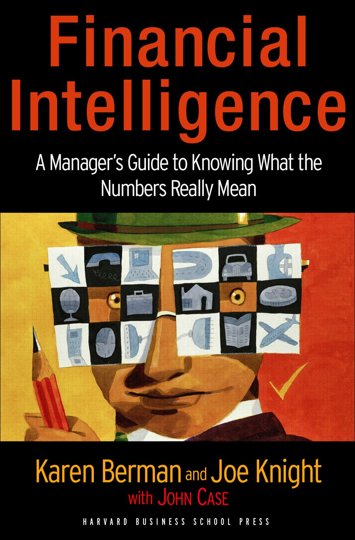
Financial Intelligence

Karen Berman, Joe Knight

Finance explained to people who aren't in the trade, without treating them as fools. The thesis is that accounting is partly an art: behind every number there are estimates and assumptions, and those who know them ask better questions. A gift for every engineer who becomes a manager, and worth rereading whenever someone presents a cost per hour as the truth.

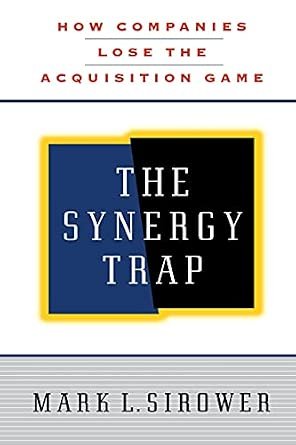
The Synergy Trap

Mark L. Sirower

Why so many acquisitions destroy value instead of creating it. Sirower explains it with brutal simplicity: you pay the premium up front and in full, while the synergies come later, if they come at all. Recommended reading before any M&A deal, and above all before the dinner where everyone toasts the agreement.

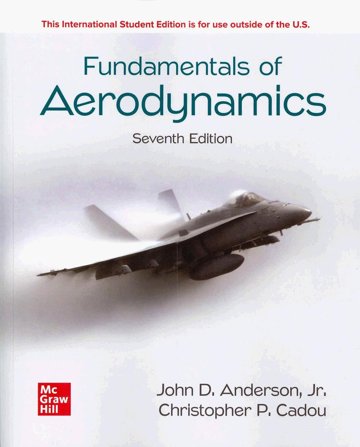
Fundamentals of Aerodynamics

John D. Anderson Jr.

The textbook on which generations of aerospace engineers learnt why an aircraft flies. Airfoils, boundary layers, supersonic flow, the Navier-Stokes equations: pages packed with integrals that, at some point, become a wing lifting off the ground. It's the fascination of engineering in its purest form: maths that looks abstract and then takes you into the sky. Tough? Try doing the exercises.

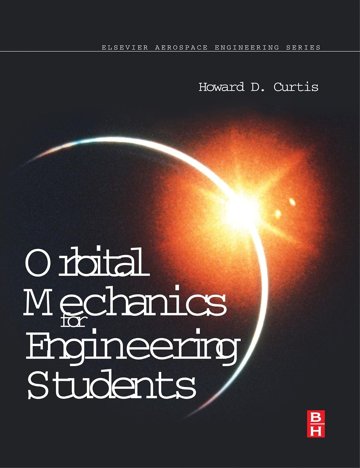
Orbital Mechanics for Engineering Students

Howard D. Curtis

Kepler, transfer orbits, orbital rendezvous: celestial mechanics explained to the people who then have to make it work. My favourite is still the rendezvous paradox: to catch up with a vehicle ahead of you in the same orbit, you have to slow down. You drop to a lower orbit, go round faster, and catch it. After an exam like that, no production plan will ever seem counterintuitive again.

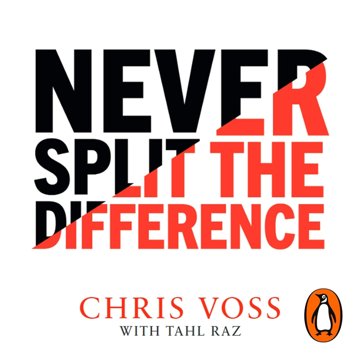
Never Split the Difference

Chris Voss, Tahl Raz

A former FBI hostage negotiator explains how to negotiate when the stakes are sky-high. No salesman's tricks: listening, tactical empathy and questions that make the other side think. And the lesson in the title: meeting halfway usually leaves everyone unhappy. Read it before negotiating with a supplier, a union or a five-year-old.

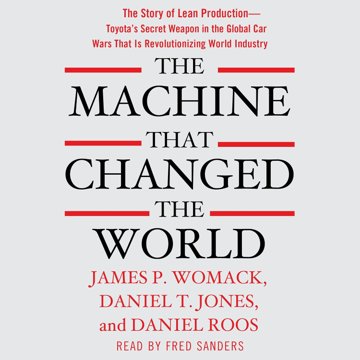
The Machine That Changed the World

James P. Womack, Daniel T. Jones, Daniel Roos

The MIT study that gave "lean production" its name, comparing car plants around the world. Data, travel, factories: Lean before it became a slogan. Read it to understand where everything else comes from.

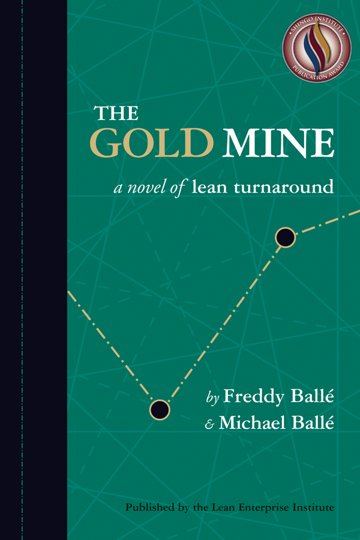
The Gold Mine

Freddy Ballé, Michael Ballé

A Lean novel written by a father and son, and you can tell: there is someone who teaches, someone who resists and someone who finally gets it. It does for Lean what The Goal did for the Theory of Constraints: it takes it out of the manuals and into a factory on the brink of closing.

How to Win Friends and Influence People

Dale Carnegie

Written in 1936, and it still works. Remember names, really listen, make the person in front of you feel important: it all sounds obvious, until you count how many times a day we forget. The oldest relationship manual on the list, and maybe the most used.

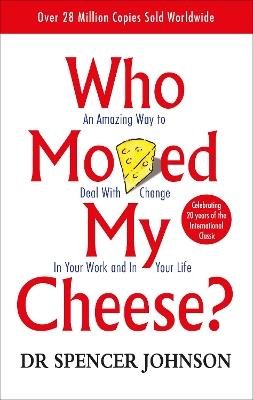
Who Moved My Cheese?

Spencer Johnson

Two mice and two little people in a maze, and some cheese that disappears. It takes half an hour to read and some find it too simple. But it's the perfect gift for anyone who says "nothing will ever change here": meanwhile, the cheese has already moved.

05

About me

The fifth of five

I was born in 1984, the fifth of five children, into a wonderful family. My father was an engineer with a capital E: upright, optimistic, with unshakeable faith in the future. A tough man who never gave up. My mother is the loving presence who holds everything together. As a boy I loved having fun, joking and playing. I never stopped.

Two passions, one path

For years I wondered which of my two great passions would become my path: music or engineering. I chose engineering, because it seemed the field where creativity could build the most.

Hands on

After graduating in Aerospace Engineering in Padua in 2008 and a short spell in advanced non-destructive testing, in 2010 I founded my first company, Revelio: a consultancy in Asset Integrity Management and Risk Based Inspection for chemical and petrochemical plants. In those years I also qualified as an International Welding Engineer at the Italian Institute of Welding in Genoa.

Then the laboratory: at LabMet I ran an ISO 17025-accredited metallurgical lab, covering mechanical testing, welding qualifications, technical consulting and training. There I also became a Level 3 expert in non-destructive testing. A rigorous and fascinating world, but I wanted to be where things get made.

So in 2013 I joined Pietro Rosa as a Special Process Engineer, and grew there one step at a time: Head of R&D, then head of Engineering, then Head of Innovation, up to leading the Manufacturing Transformation. Along the way I completed an Executive MBA at MIB Trieste and earned my Six Sigma Master Black Belt certification with Galgano. Twelve years really well spent at a cutting-edge company: an international environment, working closely with the leading OEMs in Aerospace & Defence.

Today's challenge

In 2024 I took on the challenge of Claber, a historic company from the Pordenone area, a leader in gardening solutions and now part of the FITT Group: a group from Vicenza, like me, that has put care for water and corporate responsibility at the heart of the way it works. A place where innovation and sustainability move in the same direction, and it's great to be part of the journey. In 2025 I went back to university for a degree in Safety Engineering: every factory that works starts from there.

Tick tock

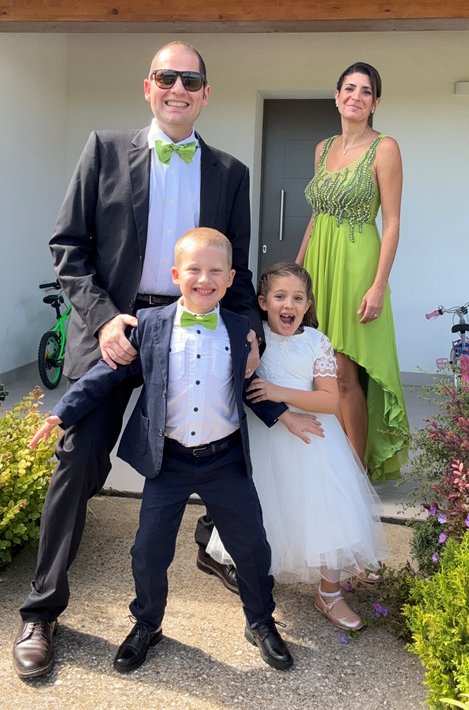
In 2018 I married Marica. Then, tick tock: Atena was born in 2020, Ettore in 2021. Our roots are in Vicenza, but we chose to plant them in the Pordenone area: this is where our family has taken root, and where we watch it grow. When I'm not working I spend as much time with them as I can, and in what little time is left I play music, look at the stars and fix things.
Isacco with his wife Marica and their children Atena and Ettore, dressed up in front of their home
06

Contact

isacco@isaccobettin.it

I enjoy meeting new people, exchanging experiences and learning from those whose job is different from mine. Write to me: I'll reply personally.